As a business owner, manager, or community leader in the Tri-Cities, you spend a lot of time thinking about safety. You run fire drills, keep first aid kits stocked, and ensure your walkways are clear. But how prepared is your facility for the ultimate medical emergency—a sudden cardiac arrest?
According to the American Heart Association, there are more than 10,000 cardiac arrests in the workplace each year in the United States. Yet, a startling statistic remains: less than 12% of individuals who experience a cardiac arrest in public have an AED applied by a bystander.
The Myth That Holds Us Back
When we speak with local organizations, the most common reason they hesitate to purchase an AED (Automated External Defibrillator) is fear. Employees worry they aren’t trained enough, that they might shock someone who doesn’t need it, or that the company will face legal liability.
It is time to bust those myths.
AEDs Are Designed for Anyone to Use
You do not need a medical background to use an AED. These incredible devices are designed specifically for the layperson. The moment you open the lid or press the power button, a calm voice will literally talk you through the entire process.
- It tells you exactly where to place the pads (with helpful pictures right on the pads themselves).
- It analyzes the heart rhythm automatically. You cannot override the machine. If the person has just fainted and their heart is beating normally, the AED will not deliver a shock, no matter how many times you press the button.
- You are protected. Good Samaritan laws protect individuals who step up to help in an emergency.
The HEARTSafe Challenge for May
This month, we challenge every business, church, and community center in Grand Haven, Spring Lake, and Ferrysburg to do an AED audit.
- Do you have one?
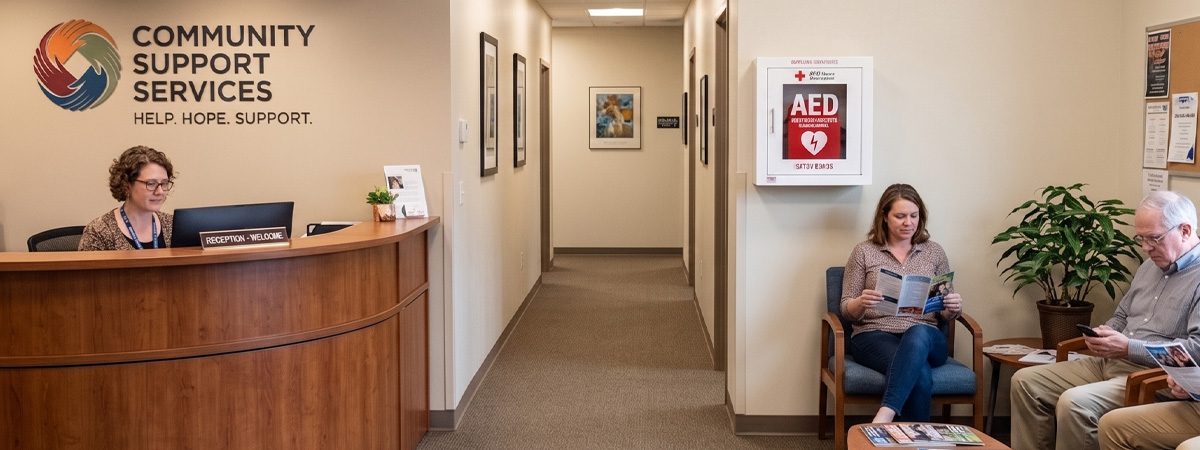
- Is it in a highly visible, accessible location (not locked in a manager’s office)?
- Are the batteries and pads up to date?
If you don’t have one, now is the time to look into making your workplace a HEARTSafe zone. When sudden cardiac arrest strikes, having an AED on the wall can be the difference between a tragedy and a survivor story.