
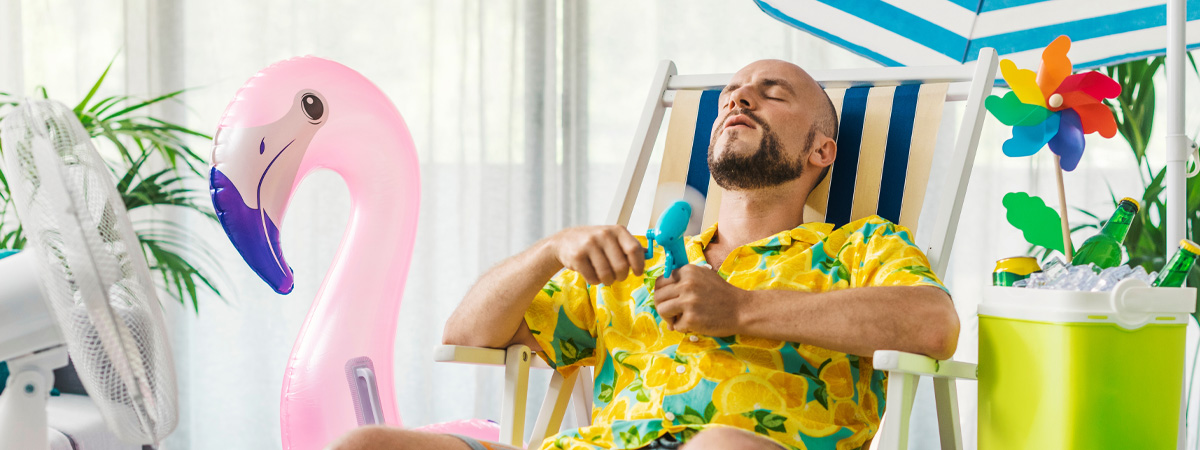
July brings some of the best weather to the Tri-Cities, drawing us out to the beaches of Lake Michigan and the trails around Spring Lake. But as the temperature and humidity rise, so does the workload on your heart.
When your body heats up, it cools itself down by radiating heat through the skin and sweating. To do this, your heart has to pump much harder and faster—sometimes circulating two to four times as much blood per minute than it does on a cool day. If you have high blood pressure, a history of heart disease, or are simply not used to the heat, this extra strain can be dangerous.
Protecting Your Engine in the Heat
You don’t have to stay indoors all summer, but you do need to be strategic.
Hydrate proactively: Your heart needs fluids to pump blood efficiently. Don’t wait until you are thirsty to drink water. Avoid excessive alcohol and caffeine, which can dehydrate you further.
Time your outdoor activities: Avoid strenuous exercise or heavy yard work during the peak heat hours of 10:00 AM to 4:00 PM.
Listen to the warning signs: Heat exhaustion can quickly turn into a heat stroke, which puts massive stress on the cardiovascular system. Watch out for dizziness, nausea, rapid pulse, and extreme fatigue.
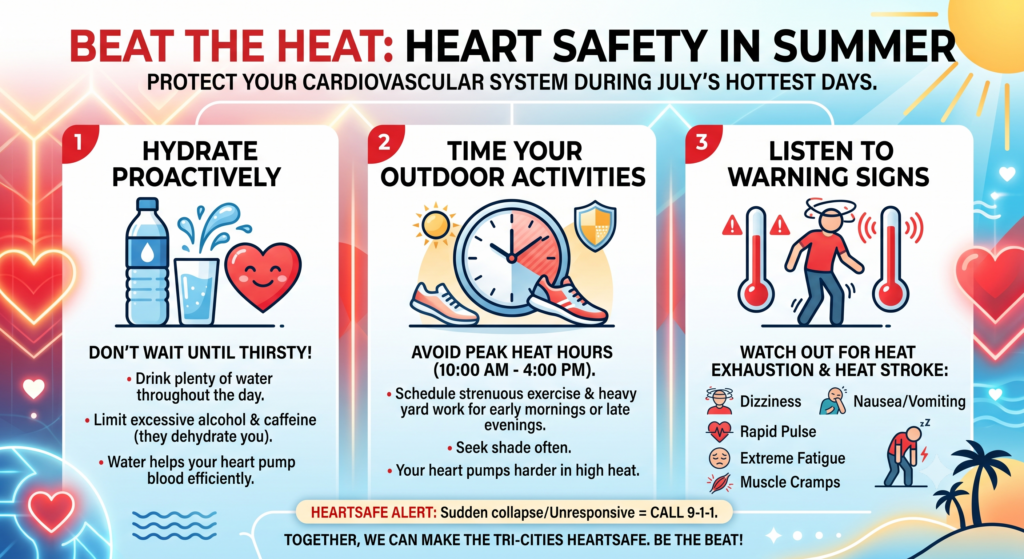
If you see someone collapse in the heat and they are unresponsive and not breathing normally, do not assume they just fainted. Call 9-1-1 immediately and begin Hands-Only CPR. It is always better to be safe and take immediate action.